
( Predicting Language Outcome and Recovery After Stroke)
In December 2019, I was invited to return for another brain scan. It involved doing language tasks in the scanner. For some tasks there were pictures and words that I had to look at inside the scanner. For other tasks there were sounds or words I had to listen to. I was asked to respond to these by talking out loud. There were also a few tasks where I was asked to make a decision about the pictures or words by pressing a button. I could still use my good arm for the left or the right button to say which one it was.
They were particularly interested in how the brain recovers after brain damage. They compare the brain structure and activity in people who have and have not had brain damage.
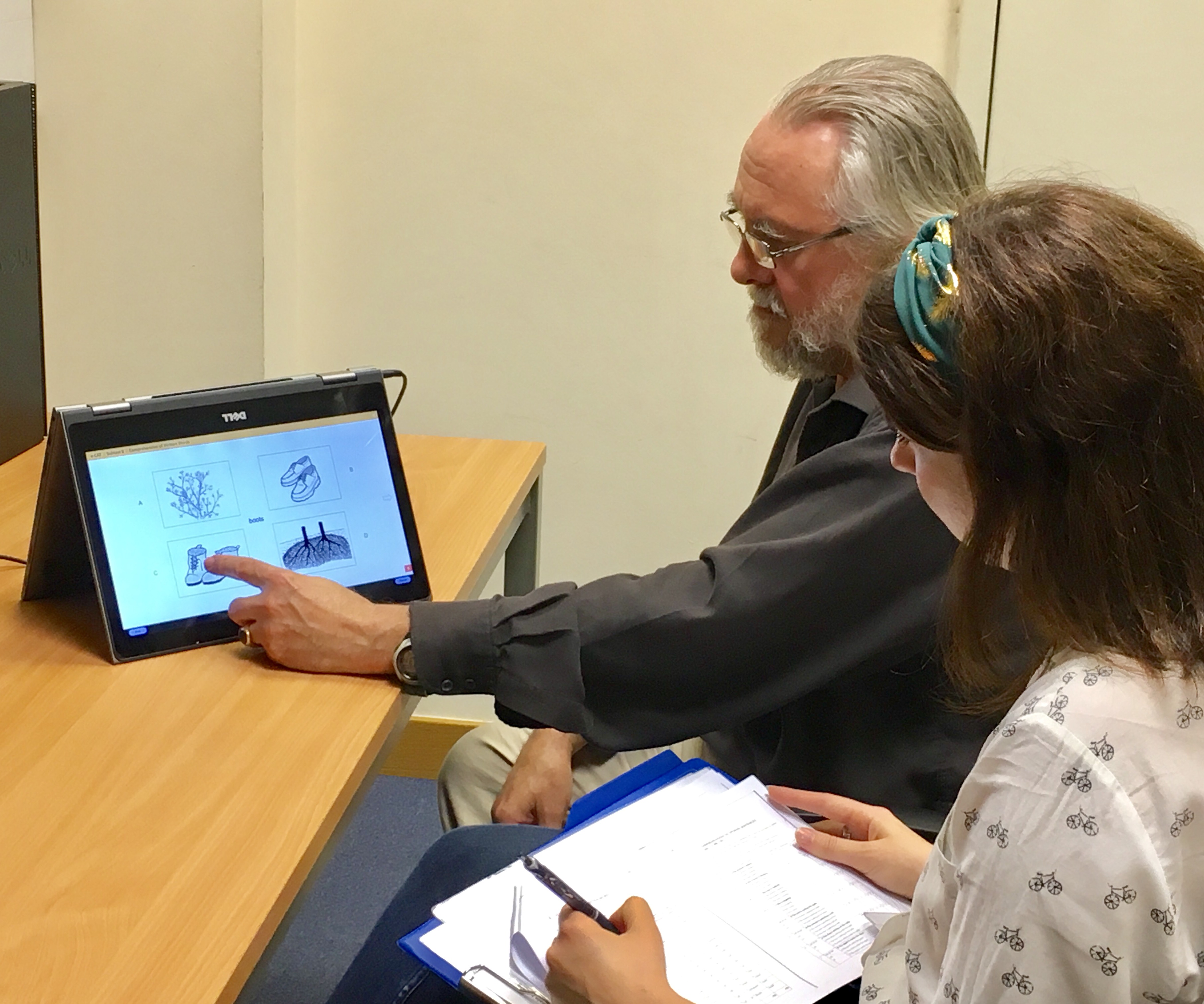
Shumi, from the PLORAS research team explained firstly that there was a practice task session (outside the scanner) so I knew what would be going on in the scanner when I did it. I would then do a hearing test and then we would go into the MRI room where I would lay in the scan for about 2 hours, doing the actual tasks (there was 14 of them).
There was a form that I had to sign, the study title was The Neural Basis of Language and Object Recognition and like before, when I went for PLORAS for the first time, there were questions about the MRI etc again
Also Shumi said, that at any time I could say that I had, had enough and leave the trial. My participation was voluntary but they hoped that their research will ultimately be used to help others to recover after brain damage
We did the tasks the first time. Shumi talked me through them and then I would do them (hoping that I was going to get it all right !) however, I didn’t lol, not all of them anyway.
Part of my Aphasia means that sometimes I can say it in my head but I can’t speak it and its frustrating because it happens and I get annoyed with myself . However, sometimes, I can say it all perfectly and no one would be aware that my speech was a little bit lacking !
However, when I couldn’t speak, it would be interesting for the researchers to see what my brain was doing and the signals that it was receiving (or not !)
One task that I struggled with, involved listening to lots of noises ( e.g a machine gun, a bell, a dog etc – about 20 of them) and I had to say what the noises were. Outside of the scanner even though we did it about 3 times, there were about 4 or 5 noises that I couldn’t get .Then inside the scanner with the same noises again, there were the same 4 or 5 that I could say in my head but again, I couldn’t say out loud.
Anyway, we did the hearing test and then I went up to reception for ½ an hour to have a break.
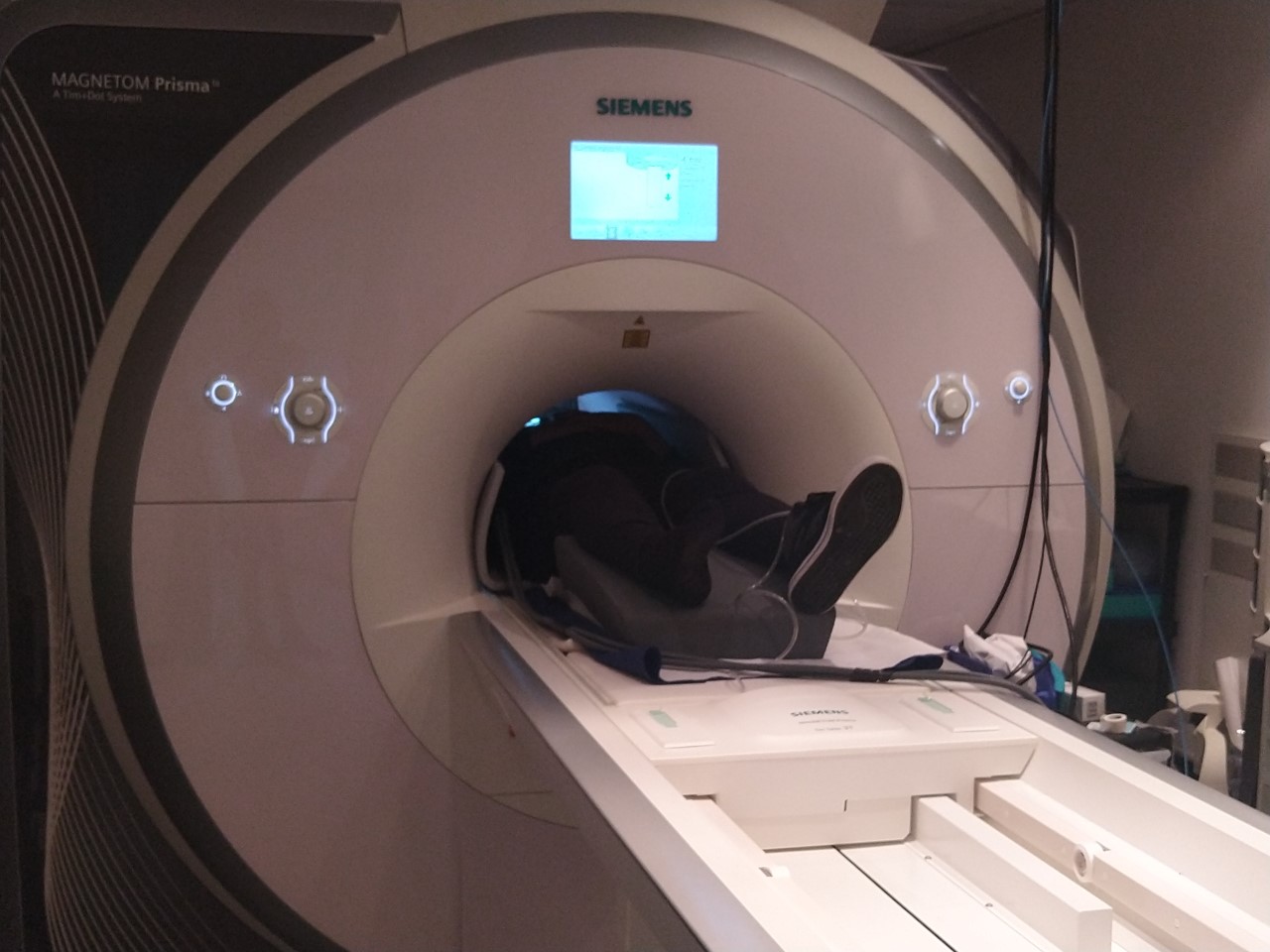
I went down to the MRI for about 2 hours. Up above my head was a screen which the different tasks were displayed on. Because the scanner is noisy, I had to wear some ear plugs. Each time, Shumi checked that I was ok and that I wanted to carry on, before we did the next task. It was important to keep my head in the same position. If my head position changed we had to wait for the scanner again to line it up etc.
Then once I had finished the tasks, they took loads of pictures of my brain, for 5 mins where my eyes were shut and 5 mins whilst they were open.
I tried to remember the tasks that I did do and the tasks that I didn’t do so well but like Shumi was saying, it was to see how my brain would react for all sorts of reasons.
So, I completed the tasks which was all good. I was tired and it was a long day in London but again I was pleased that I had done it for the future Stroke patients.
The results will be used in future research papers and will ultimately be used to help others to recover after brain damage.

 In a way, some of the questions and answers made me think that I actually was pleased with myself, that I have come a long way. My arm, leg and my speech still keep improving, every month.

 Starting Again Life after 50