Imperial College London

In September 2022, I was invited to take part in the IC3 study at Imperial College London that looks at cognitive performance after stroke. (www.ic3study.co.uk)”

Storm Anderson, part of the PLORAS Team, put me in touch with the team.. I had spent some time with Storm, talking about the last couple of years and the progression that I had made, post Stroke.

University College London and Imperial College London are trying to investigate how  people who have had a stroke recover using brain MRI scans and tests.

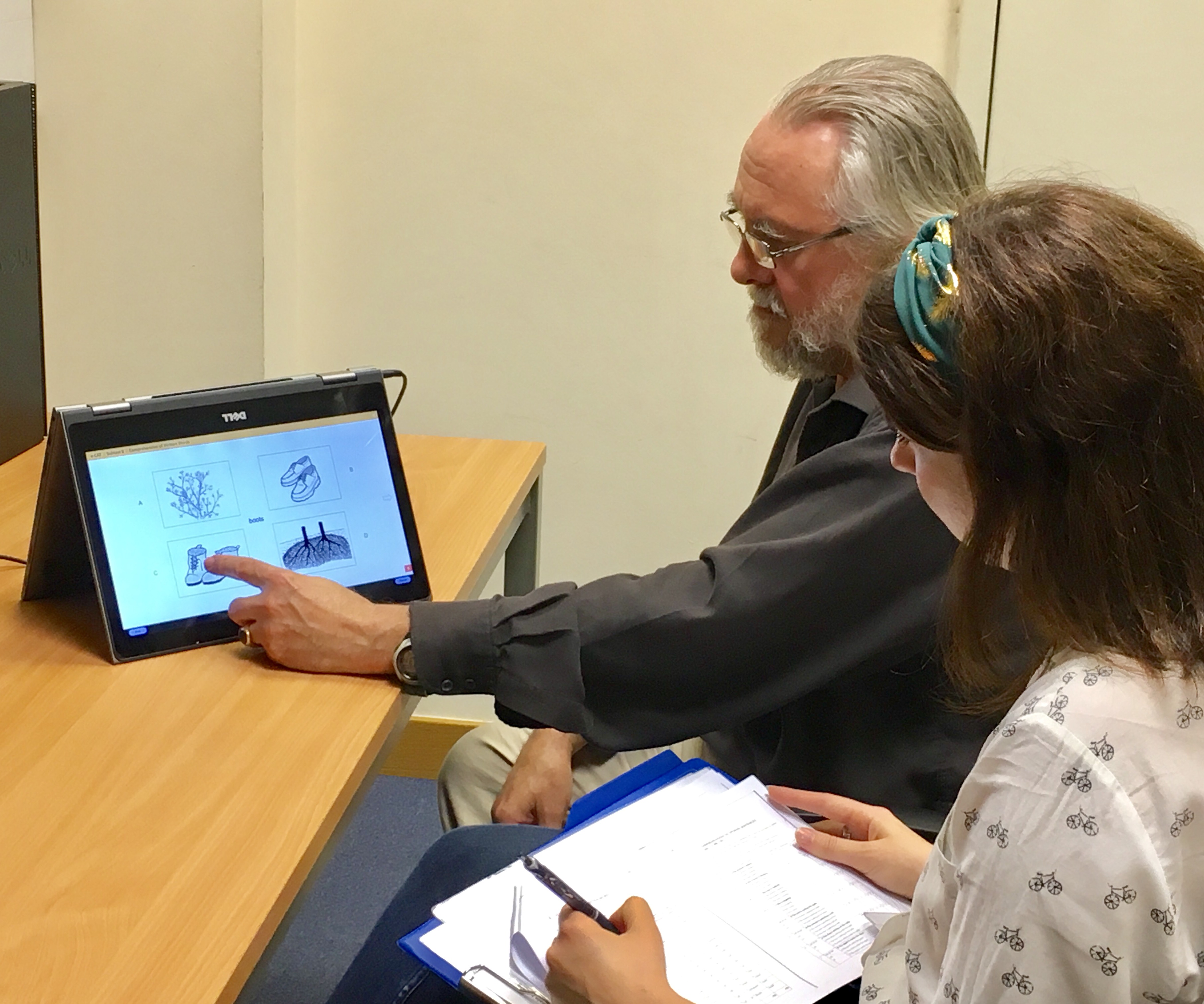
I filled out the registration online and then had an email from Dragos, PhD Candidate, who told me what to expect about the next steps and looked forward to a phone-type interview with him.

The phone interview involved an online test that I could do at home. It took approximately 60-90 minutes and I was allowed to take built-in breaks.  There was going to be a couple of tests that will record your speech so that they could estimate your language ability. During those tests, a question would pop up at the beginning, asking me to allow access to my microphone.

When I was finished I had to send the code at the end of the assessment for their records and to analyse the answers.

After a couple of weeks of completing the online test, I received an email from Dragos which had some other questions:-

  • How did I find the assessment ?
  • How did I find some of the tests that were quite hard and a bit tricky or where there tests that I found confusing or hard to complete ?
  • Did I use a tablet, computer or laptop to do the tests ?
  • If I did use a laptop, did I use a mouse or a touchpad ?

I responded that the assessment was really good and really knowledgeable from the time that I had a stroke, up until now, to see. how I have progressed ( in my head ….. lol)It may sound weird but in my brain, I can think things at the same rate as other people, but translating into sounds coming from my mouth is a bit tricky but after 7 years, again I have improved since doing the assessment.

I found there were 2 tests that were a bit challenging, the test where there were squares and round shapes and a test where there were different shapes and I couldn’t repeat it when they had shown me the first time but again I hope that in time I will find they become easier, it Is a learning curve.

I used my laptop and a mouse. So, all in all, I found it very good.
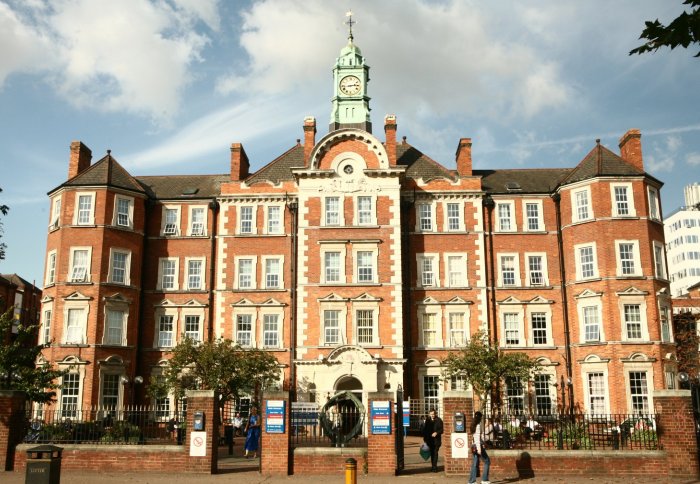
Imperial College London

At the end of November, I had an email conversation to see if I was happy to take part in MRI session. The session was going to take approximately, 1 and a half hours. there is a research scan and a clinical scan that examines your brain health and function and one of the neuroradiologists would review it to see if there are any new unexpected findings

So, in December, I went the Imperial College London and was met by Dragos and Gaya.

I had some forms to fill out with them and that explained again the next steps and the reasons for it.

Obviously, I had questions but Dragos and Gaya answered all of them so I felt very ok went I went into the MRI Scan.

I was also interviewed by Dr Fatemeh Geranmayeh, an Honorary Consultant Neurologist and Clinician Scientist who was also updating the file that they have on me as this was the first time that I had been to the hospital and were talking about the Stroke before and after the MRI scan so that she could have the whole picture.
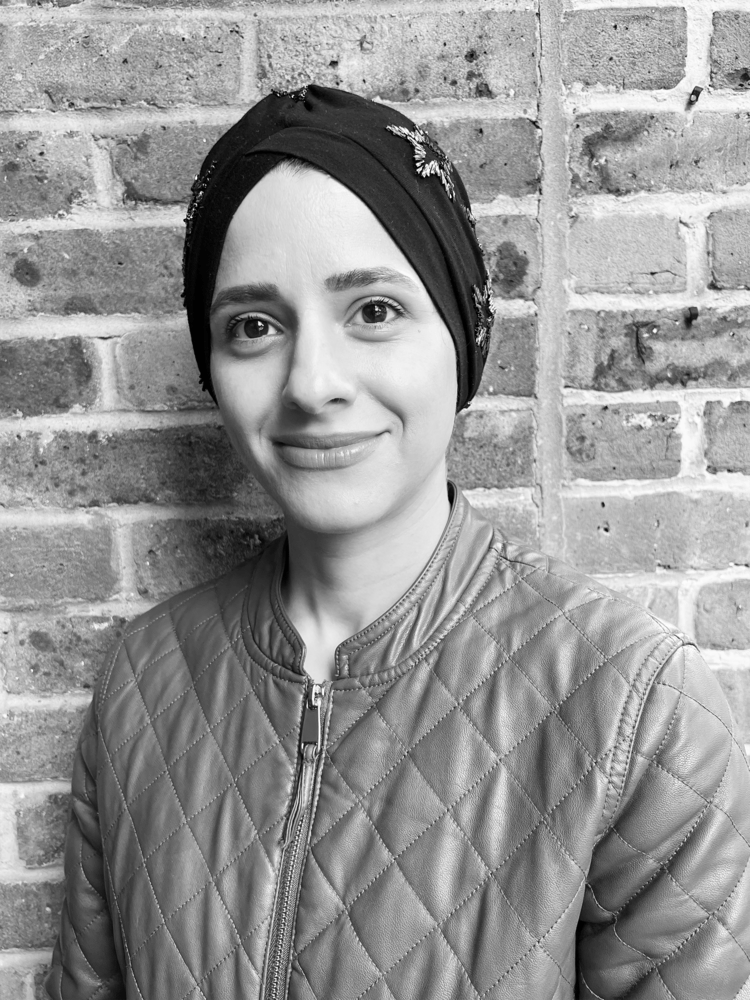
Dr Fatemeh Geranmayeh

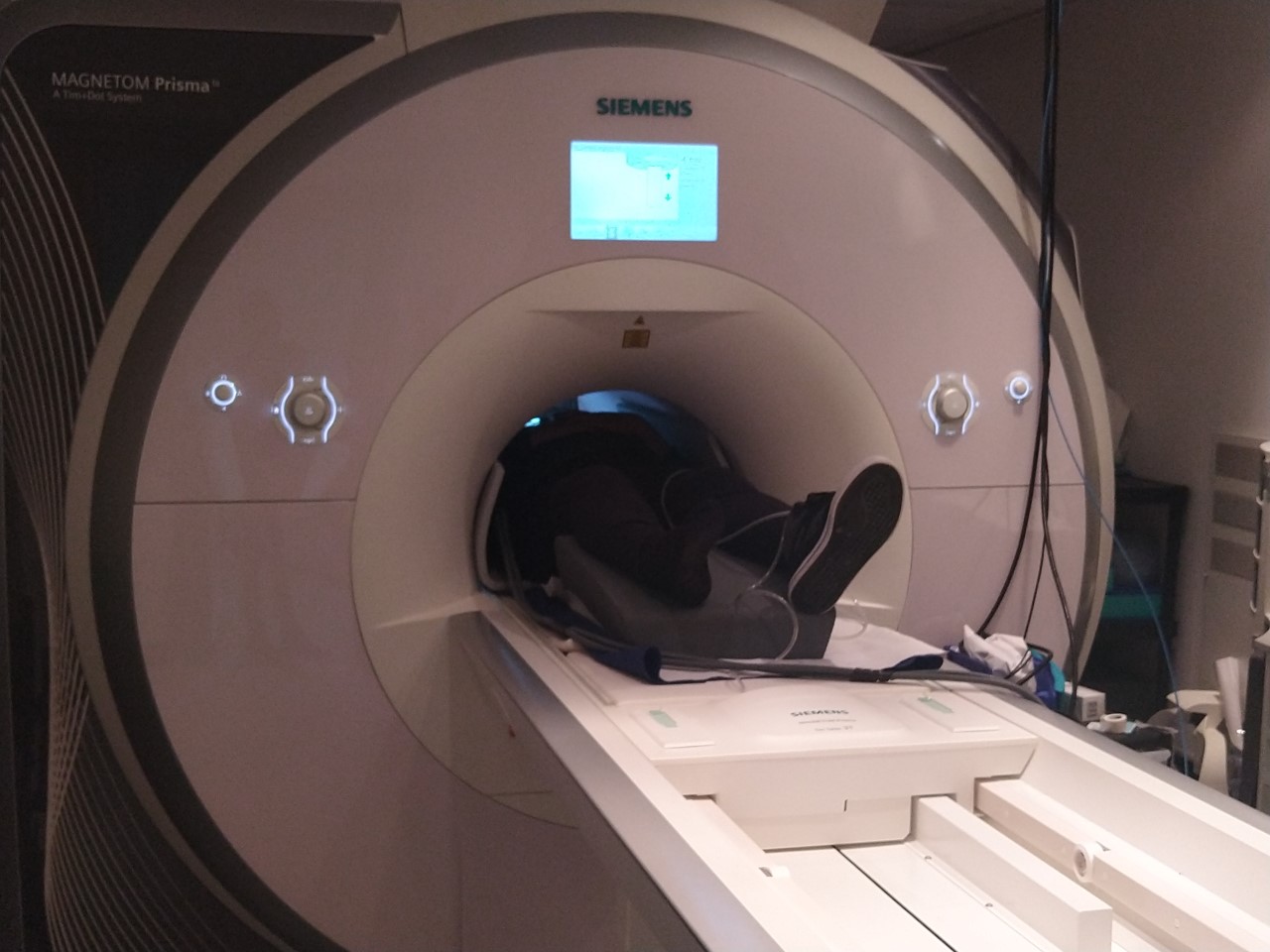
In the MRI Scan, I had earphones on and a clear visser to put over my eyes.

On the screen was a picture, then a voice said when the picture was. Then on the screen it said repeat and I had to say what the picture was. There were sets of pictures that were easy and sets of pictures that were very difficult.

At each time when I had done 6 pictures, they sped it up and I had to say what the picture was (with no reference to what it was) and each one lasted 3 seconds, each time.

This was to see if I had memory and speech about the pictures and how my brain has developed since I had my stroke.

After coming out of the MRI scan, I did a couple more tests in the lab with Dragos and again I answered questions about my stroke with Fatemeh.

Dragos Gruia

I had a really good day and the team at Imperial College London was fantastic. The  results from the neuroradiologist has reported that there is no new lesion or abnormality apart from the old stroke in the left side of my brain.  I am looking forward to the next tests/MRI in the summer from the college.

If you or anybody wants to know more about cognitive recovery in patients with cerebrovascular disease , then please click the link below
https://www.ic3study.co.uk/

PLORAS (Part 2)

( Predicting Language Outcome and Recovery After Stroke)

In December 2019, I was invited to return for another brain scan. It involved doing language tasks in the scanner. For some tasks there were pictures and words that I had to look at inside the scanner. For other tasks there were sounds or words I had to listen to. I was asked to respond to these by talking out loud. There were also a few tasks where I was asked to make a decision about the pictures or words by pressing a button. I could still use my good arm for the left or the right button to say which one it was.

They were particularly interested in how the brain recovers after brain damage. They compare the brain structure and activity in people who have and have not had brain damage.

Shumi, from the PLORAS research team explained  firstly that there was a practice task session (outside the scanner) so I knew what would be going on in the scanner when I did it. I would then do a hearing test and then we would go into the MRI room where I would lay in the scan for about 2 hours, doing the actual tasks (there was 14 of them). 

There was a form that I had to sign, the study title was The Neural Basis of Language and Object Recognition and like before, when I went for PLORAS for the first time, there were questions about the MRI etc again

Also Shumi said, that at any time I could say that I had, had enough and leave the trial. My participation was voluntary but they hoped that their research will ultimately be used to help others to recover after brain damage

We did the tasks the first time.  Shumi talked me through them and then I would do them (hoping  that I was going to get it all right !) however, I didn’t lol, not all of them anyway. 

Part of my Aphasia means that sometimes I can say it in my head but I can’t speak it and its frustrating because it happens and I get annoyed with myself . However, sometimes, I can say it all perfectly and no one would be aware that my speech was a little bit lacking !

However,  when I couldn’t speak,  it would be interesting for the researchers to see what my brain was doing and the signals that it was receiving (or not !)

One task that I struggled with, involved listening to lots of noises ( e.g a machine gun, a bell, a dog etc – about 20 of them) and I had to say what the noises  were.  Outside of the scanner even though we did it about 3 times, there were about 4 or 5 noises that I couldn’t get .Then inside the scanner with the same noises again, there were the same 4 or 5 that I could say in my head but again, I couldn’t say out loud.

Anyway, we did the hearing test and then I went up to reception for ½ an hour to have a break.

thumbnail_IMG_20191209_170754 (1)

I went down to the MRI for about 2 hours. Up above my head was a screen which the different tasks were displayed on. Because the scanner is noisy, I had to wear some ear plugs. Each time, Shumi checked that I was ok and that I wanted to carry on,  before we did the next task.  It was important to keep my head in the same position. If my head position changed we had to wait for the scanner again to line it up etc.

Then once I had finished the tasks, they took loads of pictures of my brain, for 5 mins where my eyes were shut and 5 mins whilst they were open.

I tried to remember the tasks that I did do and the tasks that I didn’t do so well but like Shumi was saying, it was to see how my brain would react for all sorts of reasons.

So, I completed the tasks which was all good.  I was tired and it was a long day in London but again I was pleased that I had done it for the future Stroke patients.

The results will be used in future research papers and will ultimately be used to help others to recover after brain damage.


PLORAS

( Predicting Language Outcome and Recovery After Stroke)

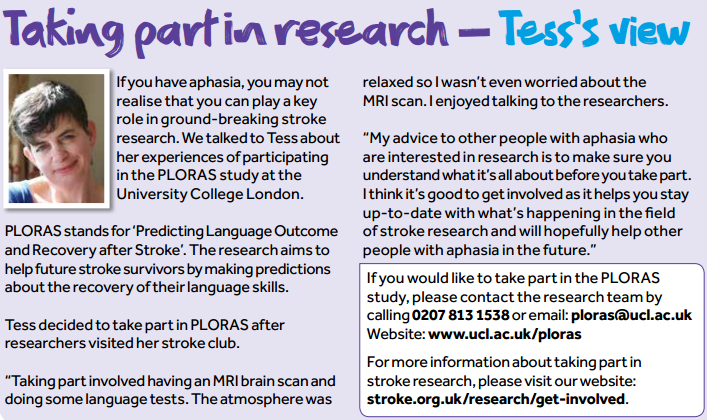
I was invited to take part in a research study called  PLORAS on 28th May 2019.

The study  include’s  hundreds of people who have had a stroke.  They carry out a Magnetic Resonance Imaging (MRI) scans of their brain and assess their speech and language with some tests.

Then, they will then find patterns between the exact area of stroke damage in the brain and each person’s speech and language abilities.

It will help them to understand: –

·       Why some people have difficulties with speech and language after their stroke and others do not

·       Why some people quickly recover speech and language after their stroke, but others take much longer.

I was very happy to do this and contribute to the research.

I took the train to London Victoria and then a taxi and arrived in plenty of time at the Welcome Centre for Human Neuroimaging in Queens Square opposite the National Hospital of Neurology and Neurosurgery where I went to do the Stem Cell trial, nearly 2 years ago.

12_Queen_Square_Door (3)

Kate was really nice and told me what I would be expecting through out the day. Obviously there was some paperwork to do about my history etc and then we went to the MRI scan.

Afterwards, we went back to another room and we did loads of tests with the computer. It lasted about 2 hours.

There was a language assessment, I  got given some tasks that would involve some speaking/ understanding/reading/writing and cognitive (thinking) also, what happened when I first had the Stroke, then a month after, then a year after and now.  Also, there were some questions about my stroke and my recovery

eCAT (2)In a way, some of the questions and answers made me think that I actually was pleased with myself, that I have come a long way.  My arm, leg and my speech still keep improving, every month.
So, the experience was a positive one, even thought I knew it would be for other Stroke patients but I was pleased with the whole day.

It will take a number of years to complete the study but it will be good for new Stroke patients to help, or predict the recovery of those who have similar strokes and language abilities.

Stroke_News_Article (2)

And now I can do the Train on my own !

img_1870

I spent a long time thinking about this……. Pre Stroke, I used to go up to London on the train and didn’t even think about it. I used to leave my car at the station and then when the train had stopped,  I used to get the underground……..

So, I pondered all week before.  I emailed to say that I wanted to go, it was at Church House, Dean Yard, Westminster in London.  Ok….. i could imagine getting to London but not on the tube yet !

On the Friday before,  I went down to Rochester Train Station.  I could only park for 3 hours, however, just around the corner was a Long Stay Car park. Which if you park in a disabled car park space and have you blue badge on display, so you can park there all day !!!

Then I went into the Station and they showed me the lift to the top floor and if I needed someone to help me on the train (and off in London) then I only had to shout. The only thing was the tube and basically it was a Taxi ride from Victoria Station.

I was really proud of myself in a way, I spent the whole day in London (via the Train Station and the Taxi) and ok, I was tired but I did it and as I say, once I have done it the first time, then its fine.

There were workshops :- iReadMore, which was a word reading app for patients with aphasia ( which i was one of them !) iTALKbetter, again an app to improve word finding. A sonic sleeve which gives auditory feedback on forward reaching movements such as reaching a cup of tea.

There were talks as well :- Stimulating Speech, Upper Limb Rehabalitation Project. It was really good and it made you think about the different effects that a Stroke can have.

I signed up to be a Volunteer for PLORAS. They do an MRI brain scan and a language assessment to predict language outcome and recovery.  So lets see…..